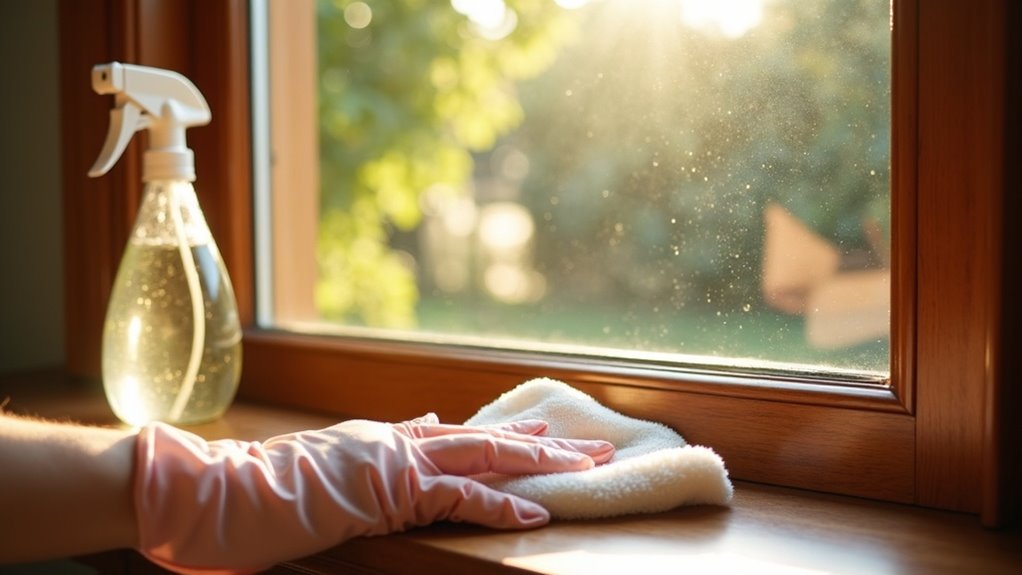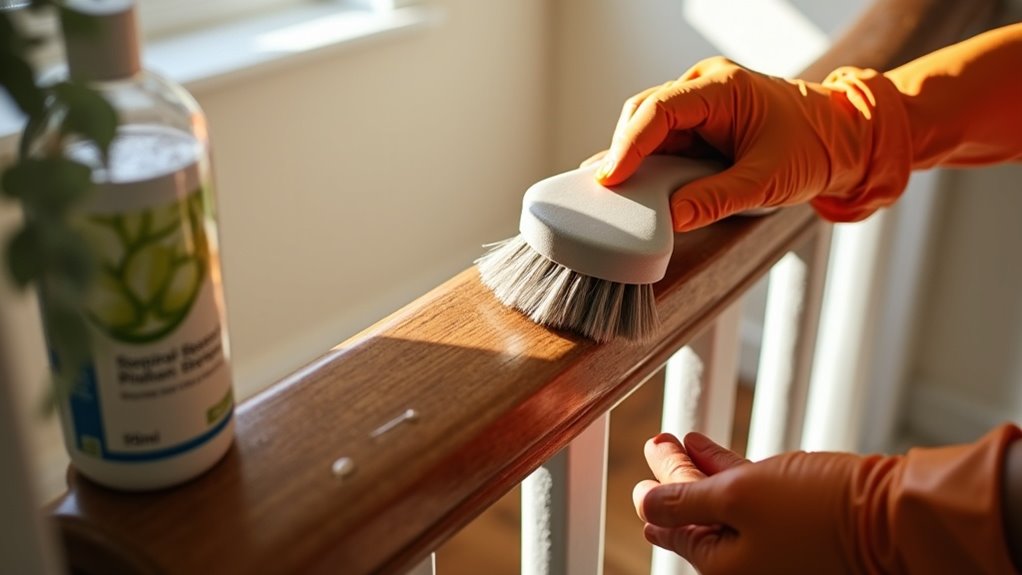
To clean handrails, first dust them with a microfiber cloth to remove loose dirt. Next, mix mild detergent with warm water in a bucket. Dampen a cloth or sponge with the solution and wipe down the handrail. For tough stains, use a soft-bristle brush. Rinse with clean water, then dry thoroughly to prevent moisture damage. If you’ve got wooden or metal handrails, there are specific tips to maintain their longevity. Let’s explore those next.
Key Takeaways
- Dust the handrail with a microfiber cloth to remove loose dirt before cleaning.
- Mix mild detergent with warm water to create a gentle cleaning solution.
- Wipe down the handrail using a damp cloth or sponge with the cleaning solution.
- For stubborn stains, use a soft-bristle brush to gently scrub the affected areas.
- Rinse with clean water and dry thoroughly with a microfiber cloth to prevent moisture damage.
Understanding the Importance of Clean Handrails
Handrails are more than just functional elements in your home; they’re essential touchpoints that can greatly impact your health and safety.
Stair railings, whether made of wood or metal railings, accumulate grime and germs, becoming potential vectors for illness. Historical references indicate that as far back as the early 1900s, these surfaces were linked to disease transmission.
A 2020 study revealed that handrails can harbor up to 100 times more bacteria than other frequently touched items. Regular cleaning not only promotes hygiene but also enhances your home’s aesthetic appeal and extends the lifespan of your railings by preventing deterioration.
Materials Needed for Cleaning Handrails
Cleaning handrails effectively requires a well-chosen set of materials that guarantee both thoroughness and safety.
Start with a mild detergent or soap mixed with warm water in a bucket. Use a soft cloth or sponge for routine cleaning, while a soft-bristle brush helps tackle dirt buildup. Don’t forget protective gloves to shield your hands.
Begin with a gentle detergent mixed with warm water, using a soft cloth or sponge for regular cleaning.
For stubborn stains on metal handrails, consider fine steel wool or non-abrasive scrubby pads. After cleaning, a microfiber cloth is essential for drying, preventing moisture that could lead to rust.
With these materials, you’ll maintain your handrails beautifully for years to come.
Step-by-Step Cleaning Process for Handrails
To effectively clean handrails, follow these straightforward steps for a thorough and efficient process.
Remember, railings are essential for safety and cleanliness.
- Dust the handrail with a soft microfiber cloth to remove loose dirt.
- Prepare a gentle cleaning solution with mild detergent and warm water.
- Dampen a cloth or sponge with the solution, wiping down the handrail thoroughly.
For stubborn stains, gently scrub with a soft-bristle brush.
After cleaning, rinse with clean water and dry with a dry cloth to prevent moisture damage.
Your efforts will guarantee a clean, safe handrail for everyone to use.
Special Considerations for Wooden Handrails
When it comes to maintaining handrails, special care is necessary for wooden varieties. Regular dusting with a microfiber cloth prevents dirt accumulation, while a gentle cleanser, like mild soap and water, protects the finish. After cleaning, apply wood polish to nourish and extend the handrail’s lifespan. Guarantee thorough drying to prevent moisture damage, and conduct regular inspections for wear or damage.
| Task | Frequency |
|---|---|
| Dusting | Weekly |
| Cleaning | Monthly |
| Polishing | Quarterly |
| Moisture Check | After Cleaning |
| Inspection | Biannual |
Tips for Maintaining Metal Handrails
To maintain metal handrails effectively, start by establishing a regular inspection schedule to catch any signs of rust or damage early.
Implement rust prevention techniques, such as applying a protective coating, to extend the lifespan of your railings.
Regular Inspection Schedule
Establishing a regular inspection schedule for your metal handrails is essential to secure their longevity and safety. Aim for inspections at least every three months to catch issues early.
During your inspections, focus on:
- Checking for loose bolts and screws, tightening them as necessary.
- Identifying any signs of corrosion or rust, treating them promptly.
- Evaluating the protective coating, reapplying as needed for durability.
Document your findings and any maintenance performed to track the condition over time.
Rust Prevention Techniques
Since metal handrails are constantly exposed to the elements, implementing rust prevention techniques is vital for their upkeep and longevity.
Regularly inspect your handrails for rust, addressing small spots immediately with a wire brush. Apply a rust-resistant primer and paint to create a protective barrier against moisture.
After heavy rain or snow, make sure you clean and dry the handrails to prevent moisture accumulation. Consider using a protective wax or sealant for added resistance to moisture and UV damage.
Finally, tighten any loose bolts and screws promptly to maintain structural integrity, reducing stress that can lead to rust formation.
Preventative Measures for Longevity of Handrails
To guarantee the longevity of your handrails, set a regular inspection schedule to catch any signs of wear or damage early on.
Applying a protective coating can shield your handrails from rust and corrosion, especially if they’re outdoors.
Regular Inspection Schedule
A regular inspection schedule for handrails is essential for guaranteeing their safety and longevity.
Aim to inspect them monthly, focusing on:
- Stability: Verify the handrail is firmly attached and doesn’t wobble.
- Condition: Look for rust on metal railings or cracks and splinters on wood.
- Documentation: Keep a record of your findings and any maintenance performed.
For high-use areas like staircases, increase inspection frequency.
By staying proactive, you’ll address issues early, providing a safer environment for everyone.
Regular checks not only enhance safety but also extend the life of your handrails considerably.
Protective Coating Application
Regular inspections not only help identify issues but also set the stage for ongoing maintenance practices like protective coating application.
For metal handrails, apply a rust-resistant primer or sealant to shield against corrosion and moisture.
For wooden handrails, use a high-quality wood finish or varnish to enhance their look while protecting against scratches and moisture.
Regularly check the coating for wear; timely reapplication prevents deterioration.
Consider a protective wax for metal railings to create a water-repellent barrier.
If your handrails are outdoors, opt for a UV-resistant coating to maintain vibrancy and function, ensuring safety and aesthetics for all.