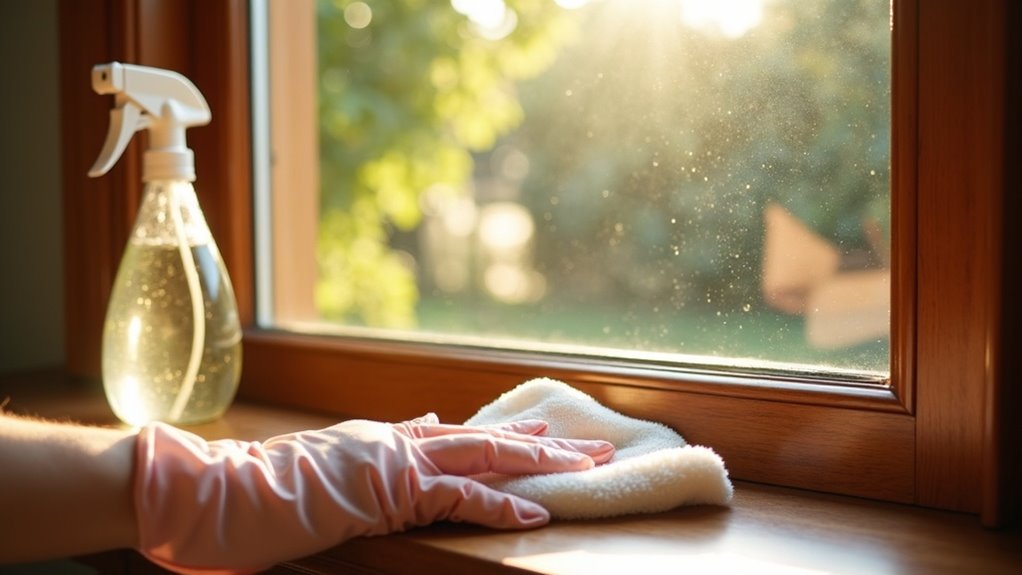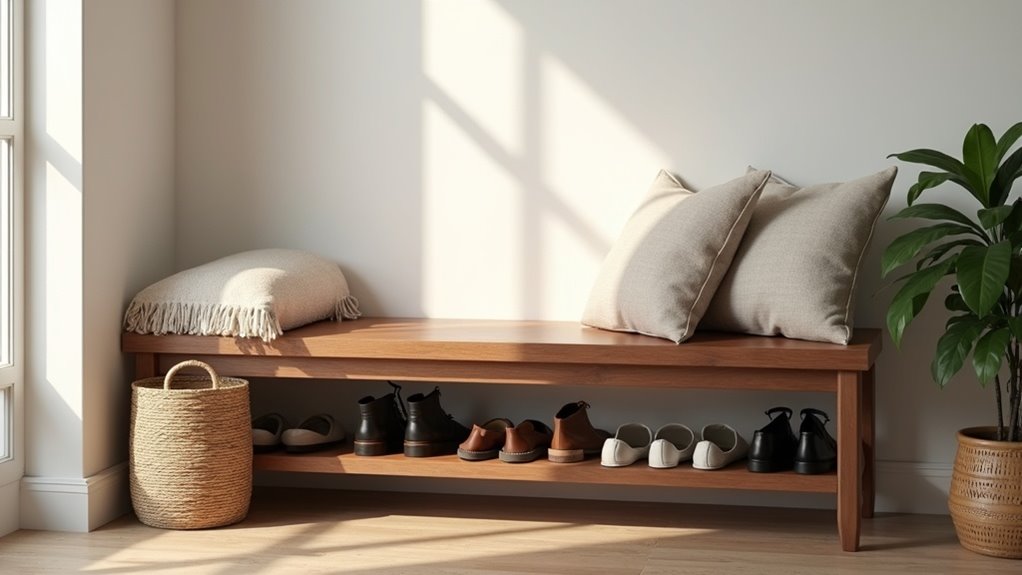
To maintain your entry bench, dust it weekly with a soft cloth and apply wood polish or natural oil every few months. Wipe up spills immediately to prevent damage and position the bench away from direct sunlight and heating vents to avoid fading. Organize items regularly and consider using storage solutions for a clutter-free space. By following these tips, you’ll guarantee your bench stays beautiful and functional. Discover more effective maintenance strategies to keep it in top shape!
Key Takeaways
- Dust the entry bench weekly using a soft brush or microfiber cloth to prevent dust buildup and maintain its appearance.
- Wipe up spills immediately and dry the area thoroughly to prevent water damage and preserve the wood’s finish.
- Position the bench away from direct sunlight and heating vents to avoid fading and cracking over time.
- Regularly declutter the bench by sorting items and implementing a “one in, one out” rule to keep the space organized.
- Apply wood polish or natural oils every few months and consider a protective sealant for enhanced durability and shine.
Establish a Regular Cleaning Routine
To keep your entry bench looking its best, establishing a regular cleaning routine is essential.
Start by dusting the bench weekly with a soft-bristled brush or microfiber cloth to prevent dust accumulation and scratches.
Dust your bench weekly with a soft brush or microfiber cloth to keep it scratch-free and pristine.
Every few months, apply wood polish or natural oils like beeswax to maintain its shine and protect against water damage.
Make sure to check the bench’s environment weekly, avoiding direct sunlight and extreme temperatures to prevent warping or fading.
Finally, include a quarterly deep clean to inspect and treat any scratches.
This routine not only enhances the bench’s beauty but also complements your storage solutions beautifully.
Address Spills Promptly
Even with a regular cleaning routine, accidents can happen, and addressing spills promptly is key to preserving your entry bench’s integrity. For your small entryway bench, act fast to prevent liquid from seeping into the wood, which can lead to rot. Use a damp cloth to wipe up spills immediately, then dry the area thoroughly with a soft cloth. Avoid hot water, as it can damage the wood’s finish. Regularly inspect for water damage, and consider applying a protective sealant to repel liquids.
| Action | Outcome |
|---|---|
| Wipe immediately | Prevents wood damage |
| Dry thoroughly | Maintains appearance |
| Inspect regularly | Detects potential issues |
| Use damp cloth | Avoids further damage |
| Apply sealant | Eases future cleanup |
Protect From Sunlight and Temperature Changes
To keep your entry bench looking its best, you’ll want to protect it from direct sunlight and temperature fluctuations.
Positioning it away from windows and heating vents can prevent fading and cracking.
Using a protective cover when it’s not in use adds an extra layer of defense against these elements.
Avoid Direct Sunlight Exposure
While you may love the natural beauty of your entry bench, exposure to direct sunlight can quickly diminish its appeal. Sunlight exposure can cause fading and discoloration, making your beautiful wood look worn.
To safeguard it, position the bench away from windows or use curtains and blinds to filter harsh rays. Regularly applying wood polish or oil treatment helps maintain the wood protective layer, providing extra resistance against UV damage.
Additionally, consider using furniture covers or placing the bench in shaded areas, which can greatly extend its lifespan and keep it looking pristine for all who enter your home.
Maintain Stable Temperature Conditions
Maintaining stable temperature conditions is essential for the longevity of your entry bench, as drastic changes in temperature can lead to warping and damage. Position your bench away from direct sunlight and heating vents to minimize temperature fluctuations. Use curtains or blinds to filter sunlight and consider a dehumidifier or humidifier to regulate humidity levels. Regularly check for signs of damage, like cracks or splits, to address issues promptly.
| Action | Purpose | Tool/Method |
|---|---|---|
| Position away from sun | Prevent fading | Location choice |
| Use curtains | Filter sunlight | Curtains/Blinds |
| Monitor humidity | Prevent wood expansion | Dehumidifier/Humidifier |
| Check for damage | Address issues early | Regular inspections |
Use Protective Covers Regularly
Using protective covers regularly is a smart way to shield your entry bench from the damaging effects of direct sunlight and extreme temperature changes.
These covers prevent fading and discoloration of the wood finish while regulating temperature fluctuations to reduce cracking and splitting. By keeping dust and moisture at bay, protective covers can greatly extend your bench’s lifespan.
Opt for breathable fabric that allows air circulation and protects against UV rays, ensuring your bench stays in prime condition. Investing in custom-fit covers offers a snug fit, providing better protection against harsh weather, especially when placed near entryways exposed to the elements.
Use Polishing and Oil Treatments
To keep your wooden entry bench looking its best, regular polishing and oil treatments are essential.
These treatments not only enhance the shine but also boost durability, ensuring your bench serves guests beautifully for years. Use natural products like beeswax and olive oil, as they nourish the wood while protecting it from moisture.
Apply the polish or oil with a soft cloth for even coverage, then buff with a clean cloth for a glossy finish. For ideal results, consider polishing or oiling every few months, especially in high-traffic areas, to guard against water damage and maintain its stunning appearance.
Seek Professional Restoration When Needed
When your entry bench starts showing signs of wear, seeking professional restoration can be a smart move.
Experts can effectively tackle scratches, scuffs, and water damage, restoring your bench’s original beauty. They use specialized techniques and high-quality finishes that enhance durability, ensuring your shoe storage and hidden storage remain functional and appealing.
Organize and Declutter Regularly
To keep your entry bench looking its best, regularly sort through the items you have and remove anything you no longer need.
Utilize storage solutions like bins or baskets to keep smaller items organized and accessible, while maintaining a minimalist approach to avoid clutter.
Regularly Sort Items
Regularly sorting items on your entry bench is essential for maintaining a clutter-free space. By identifying frequently used items, you can keep only the essentials, enhancing storage efficiency.
Implement a “one in, one out” rule to maintain balance; for every new item, remove an old one. Set aside time at least once a month for a thorough decluttering session, focusing on items no longer needed.
Use designated containers or baskets to categorize similar items, ensuring easy access and organization. Encourage family involvement in the sorting process, fostering a shared responsibility for a tidy, functional entryway that welcomes everyone.
Utilize Storage Solutions
Sorting items is just the beginning of maintaining an organized entry bench.
Implement effective storage solutions like bins and baskets to categorize smaller items, minimizing clutter. Regularly declutter by removing infrequently used items, following the “one in, one out” rule.
Maximize space with vertical storage, such as wall-mounted hooks and shelves, keeping essentials accessible yet tidy. Labeling storage containers helps everyone quickly identify contents, encouraging family members to return items to their rightful places.
Schedule seasonal decluttering sessions to reassess your organization system, adapting storage solutions as your needs change.
With these strategies, your small bench will stay functional and inviting.
Maintain Minimalist Approach
Maintaining a minimalist approach at your entry bench not only enhances its aesthetic appeal but also simplifies daily routines. Regularly assess items and remove those no longer needed to guarantee a clutter-free environment. Implement a “one in, one out” rule to prevent accumulation. Schedule monthly decluttering sessions to keep the space organized. Encourage family members to return items immediately after use, fostering good habits.
| Action | Frequency | Benefits |
|---|---|---|
| Assess Items | Weekly | Identify unnecessary items |
| Declutter | Monthly | Maintain organization |
| One In, One Out | Ongoing | Prevent clutter |