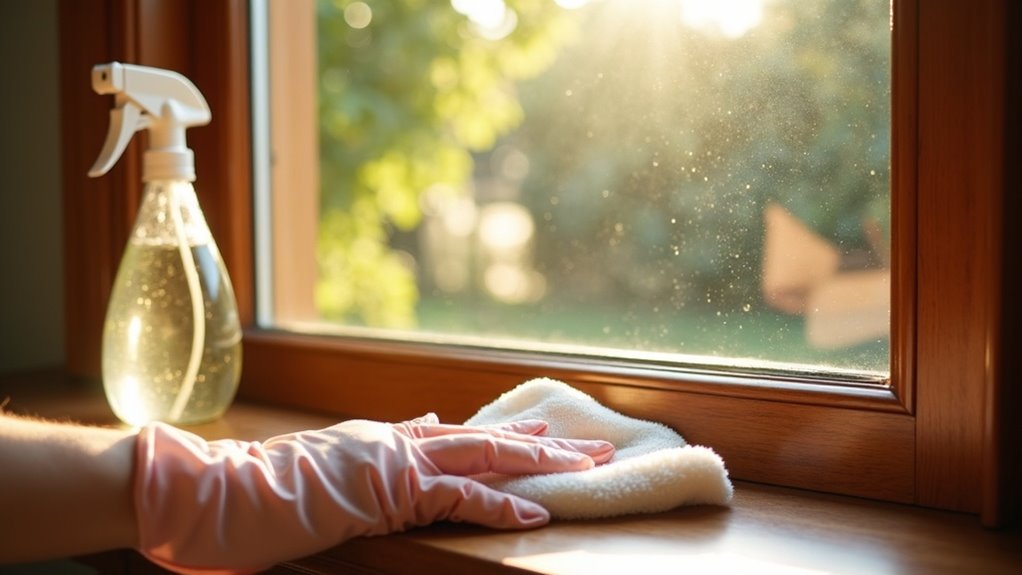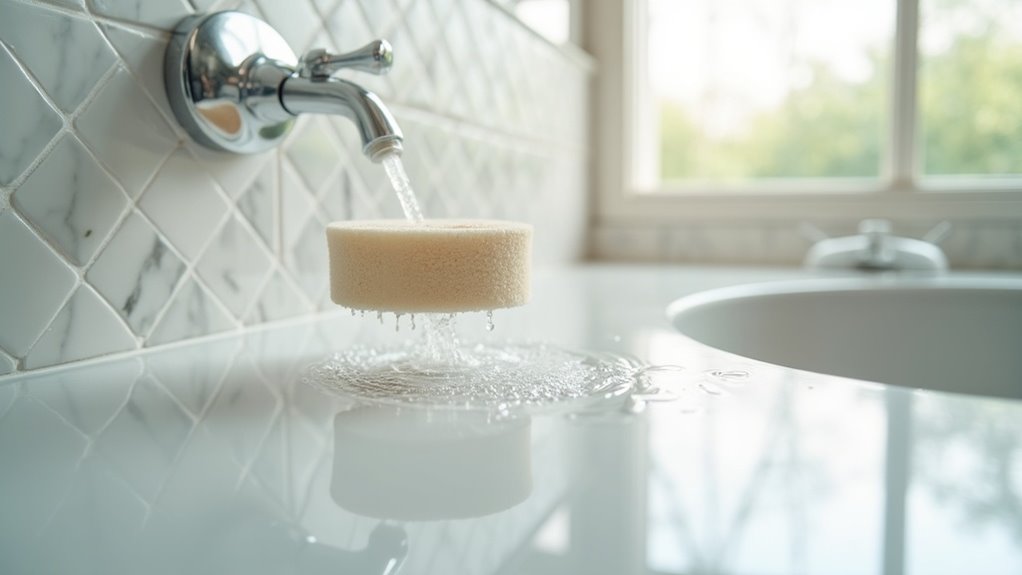
To clean your tile backsplash in the powder room, start with warm, soapy water and a microfiber cloth for daily maintenance. Focus on high-traffic areas to tackle grease and splatters immediately. For stubborn stains, apply a suitable cleaner, let it sit, then scrub with a soft-bristle brush. Rinse as needed and dry promptly to prevent mildew. Regular deep cleaning will enhance its longevity and hygiene. There’s more to explore about effective cleaning techniques and tips.
Key Takeaways
- Use warm, soapy water and a microfiber cloth for daily cleaning of the tile backsplash in the powder room.
- Focus on high-traffic areas to prevent grease and stains from accumulating.
- For tough stains, apply a suitable cleaner and let it sit for 5 to 15 minutes before scrubbing gently.
- Rinse the surfaces thoroughly and dry them immediately to avoid mildew growth.
- Schedule a weekly deep cleaning to maintain hygiene and enhance the appearance of the backsplash.
Importance of Regular Cleaning
When you neglect to clean your tile backsplash regularly, you risk allowing tough stains and grime to settle in, which can be a real hassle later on.
A clean backsplash not only enhances your kitchen’s appearance but also maintains hygiene. Immediate attention to spills helps prevent food stains and mold growth.
A clean backsplash boosts your kitchen’s look and hygiene, preventing stains and mold with prompt spill management.
Using warm soap and water for regular cleaning keeps surfaces fresh and extends the life of your tiles. Focus on areas behind sinks and stoves, as they need thorough cleaning more often.
Establishing a consistent cleaning schedule guarantees a healthier kitchen environment for you and those you serve.
Daily Cleaning Routine
To keep your tile backsplash looking its best, make warm, soapy water your go-to solution for daily cleaning.
Focus on high-traffic areas, especially where grease and splatters accumulate, to prevent buildup. A quick wipe-down after cooking can save you from tougher stains later on.
Use Warm Soapy Water
A daily cleaning routine for your tile backsplash can make a significant difference in maintaining its appearance and longevity.
To keep your backsplash looking fresh, follow these steps:
- Mix warm water with a few drops of dish soap.
- Soak a sponge in the soapy solution and wipe down the backsplash.
- Focus on areas prone to splatters for effective quick clean-ups.
- Dry the backsplash immediately with a lint-free cloth to prevent mildew growth.
Focus on High-Traffic Areas
While you might think that occasional deep cleaning is enough, focusing on high-traffic areas of your tile backsplash daily can considerably enhance its appearance and longevity.
Make it a habit to wipe down those spots, especially around sinks and handwashing stations, where soap scum and splatters are common. Use a microfiber cloth soaked in warm, soapy water or a diluted vinegar solution for effective cleaning your tile.
Quick clean-ups after each use will keep your backsplash tiles looking fresh. Remember to schedule a thorough cleaning weekly to tackle any grime buildup, ensuring your clean kitchen backsplash remains inviting for everyone.
Deep-Cleaning Necessity
When your powder room sees heavy foot traffic or frequent use, deep cleaning becomes essential to keep grime and stains at bay.
Regular maintenance helps, but for those tough stains, a thorough approach is necessary. Here’s why deep cleaning matters:
Regular upkeep is important, yet tackling stubborn stains requires a dedicated deep cleaning strategy.
- It prevents buildup around sinks and faucets, ensuring hygiene.
- Specialized cleaning solutions work wonders on tile and grout.
- It preserves the beauty of your backsplash.
- A fresh, clean space enhances your guests’ experience.
Deep-Cleaning Process
To keep your tile backsplash looking its best, a systematic deep-cleaning process is key.
Start by applying a suitable cleaner to the tile, letting it sit for 5 to 15 minutes based on grease levels.
Then, use a soft-bristle brush or sponge to scrub the backsplash, concentrating on areas with stubborn grime.
Rinse the surface as needed, following the cleaning solution’s instructions to remove all residues.
If your kitchen sees heavy cooking, consider chemical solutions safe for tile and grout, adhering to the manufacturer’s guidelines.
Regular deep cleaning will ease future maintenance and enhance your backsplash’s longevity and charm.
Post-Cleaning Tips
After you’ve cleaned your tile backsplash, it’s vital to follow a few post-cleaning tips to maintain its fresh look and longevity.
- Immediately dry the backsplash with a microfiber towel to prevent water streaks and mildew.
- Guarantee good ventilation to promote drying and reduce odors from cleaning solutions.
- Regularly inspect the backsplash for any damage; catching issues early enhances its longevity.
- Consider applying a sealant to natural stone backsplashes post-cleaning to protect against stains and simplify future cleaning.
These steps will help keep your backsplash tile looking pristine and ready to impress!
Cleaning Tools and Solutions
Choosing the right cleaning tools and solutions is essential for maintaining your tile backsplash’s beauty without causing damage.
Start with a microfiber cloth, as it effectively captures dirt on tile surfaces without scratching. For a natural cleaner, mix baking soda and water or use a mild cleaner designed for tiles.
If you encounter tougher stains, a soft-bristle brush can help scrub gently without harming the grout or tiles.
Always test any solution on a small, inconspicuous area first to avoid discoloration.
With the right approach, you’ll keep your backsplash sparkling and inviting for all who visit.
Natural Cleansers and General Backsplash Cleaning Tips
When it comes to cleaning your tile backsplash, natural cleansers like a vinegar-water mixture or baking soda paste can work wonders without harsh chemicals.
You can easily tackle stubborn grease stains and maintain a fresh look by incorporating lemon juice for added power.
Don’t forget, regular upkeep through daily wipe-downs and weekly deep cleans will keep your tiles looking their best!
Effective Natural Cleaners
To keep your tile backsplash looking pristine, natural cleaners like white vinegar and baking soda are your best friends. These effective, grease-cutting solutions are safe for most tile surfaces and help create a healthier home.
Here are four tips to enhance your cleaning routine:
- Mix equal parts of water and white vinegar for a simple yet powerful cleaner.
- Heat the vinegar solution to tackle tougher stains effortlessly.
- Add lemon juice for a pleasant scent and extra grease-cutting power.
- Regularly use these natural cleansers for a fresh, inviting space, ensuring safety for children and pets.
DIY Cleaning Solutions
Natural cleaners provide a fantastic foundation for maintaining your tile backsplash, but there are even more DIY solutions to contemplate for a sparkling kitchen.
Mix equal parts white vinegar and water for a powerful solution; heat it for tougher stains. For stubborn spots, combine baking soda and water into a paste, acting as a mild abrasive cleaner.
Don’t forget lemon juice to enhance grease-cutting ability! To keep your backsplash pristine, clean your kitchen promptly after spills.
These tips and tricks guarantee you avoid harsh chemicals while embracing effective, eco-friendly cleaning methods for a lovely, welcoming space.
Grout Care and Maintenance
Although grout lines might seem like a minor detail in your tile backsplash, neglecting their care can lead to unsightly stains and potential mold growth.
Here are some essential tips for effective grout care:
- Regularly clean grout lines with a soft-bristled toothbrush dipped in a baking soda solution.
- Apply a baking soda paste, let it sit for 15 minutes, then scrub and rinse.
- Seal grout lines periodically to protect against moisture and staining.
- Inspect grout for cracks to prevent water infiltration and mildew growth.