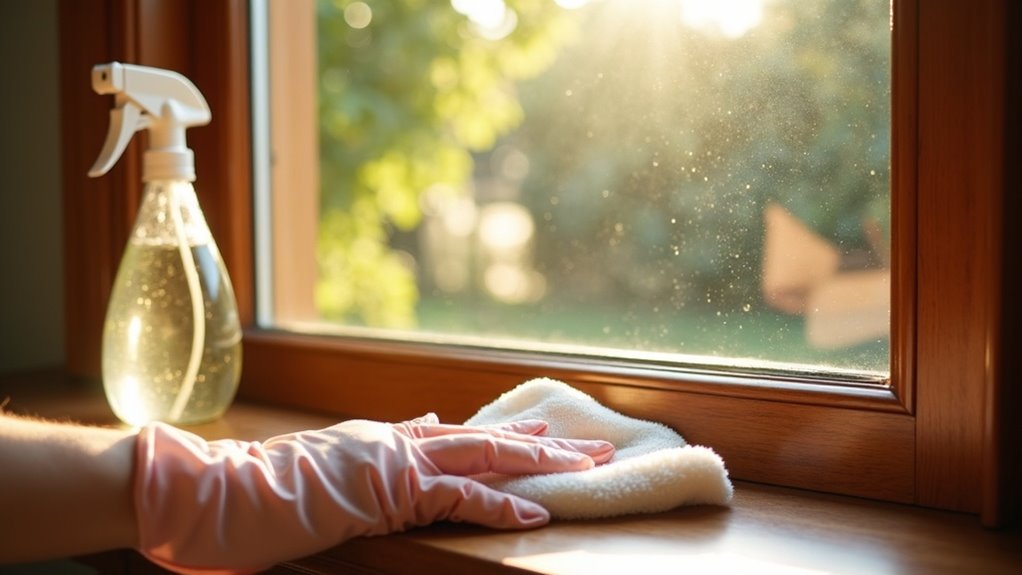
To dust your dining room blinds, use a microfiber cloth or duster weekly to capture dust effectively. For hard-to-reach areas, a vacuum with a brush attachment works wonders. If you notice stubborn grime, a damp cloth with soapy water can help. Be sure to check for stains regularly to avoid tougher clean-ups later. This routine not only keeps your blinds looking great but also maintains a clean environment, and there are more tips to enhance your cleaning strategy.
Key Takeaways
- Dust your dining room blinds every week or two to maintain cleanliness and a welcoming environment for guests.
- Use a microfiber cloth or duster to effectively capture dust without spreading it into the air.
- Employ a vacuum cleaner with a brush attachment for hard-to-reach areas and deeper dust removal.
- For stubborn grime, use a damp cloth or a soapy water solution for thorough cleaning.
- Regularly check for stains or sticky spots to prevent the need for intensive cleaning later on.
Types of Dining Room Blinds
When choosing blinds for your dining room, it’s essential to take into account the style and functionality that best suits your space.
Venetian blinds offer horizontal slats in wood, vinyl, or aluminum, providing a classic look. If you have large windows, consider vertical blinds for a modern touch and easy light control.
Roller shades can elevate your decor with various materials and patterns, while celluloid blinds, resembling Roman shades, filter light beautifully.
How Often Should You Dust Your Blinds?
Regularly dusting your blinds is vital for maintaining a clean and inviting dining room. Aim to dust your blinds every week or two to prevent dust and grime buildup.
If you have pets, consider adjusting this frequency, as their presence can increase dust accumulation. Quick dusting with a duster or microfiber cloth can effectively reach all slats, keeping your space pristine.
Regular maintenance helps you avoid the need for a deep clean, which can be time-consuming and labor-intensive. By staying on top of your dusting routine, you’ll guarantee a welcoming environment for your guests.
Materials Needed for Dusting
To effectively dust your dining room blinds, you’ll need a few essential cleaning tools.
A microfiber cloth or duster is key for trapping dust, while a vacuum with a brush attachment can help reach tricky spots.
Don’t forget rubber gloves for better grip and protection, and consider a damp cloth for more stubborn grime.
Essential Cleaning Tools
Dusting dining room blinds requires the right tools to guarantee an efficient and effective clean. Start with a microfiber cloth or duster to trap dust without spreading it in the air.
A vacuum with a brush attachment can gently remove debris from both horizontal and vertical blinds. If you need a deeper clean, prepare a bucket of warm, soapy water and have two clean towels ready.
Consider using rubber bands to secure the cloth around a tool for simultaneous cleaning on both sides. Finally, wearing a mask can help you avoid inhaling any dust particles during the process.
Recommended Dusting Techniques
With the right tools in hand, you can effectively tackle dust on your dining room blinds using various techniques.
Here are three recommended methods:
- Microfiber Cloth/Duster: This method works best to capture dust without sending it airborne.
- Vacuum Cleaner: Use a brush attachment to reach those hard-to-access areas.
- Soapy Water Solution: For wooden or vinyl blinds, dampen your cloth with a mild detergent solution to lift and trap dust efficiently.
Remember to dust regularly—every week or two—especially in homes with pets, and guarantee the area is well-ventilated while you work.
Step-by-Step Dusting Process
Start by fully closing your dining room blinds to reveal the top surfaces of each slat. Use a microfiber cloth or duster to wipe down each slat, starting from the top and moving down. For vertical blinds, pull slats to one side and clean them individually.
| Step | Action | Tips |
|---|---|---|
| 1 | Close blinds | Expose top surfaces |
| 2 | Dust with cloth/duster | Work top-down |
| 3 | Vacuum if very dusty | Use brush attachment |
| 4 | Damp wipe if needed | Add a bit of dish soap, let them soak |
Regularly dust every week or two!
Tips for Effective Dusting
To keep your dining room blinds looking their best, set a regular maintenance schedule for dusting every week or two.
Use effective tools like a microfiber cloth or a vacuum brush attachment to trap dust without spreading it around.
Staying consistent with your cleaning routine will prevent dirt buildup and make the job easier.
Regular Maintenance Schedule
Establishing a regular maintenance schedule is essential for keeping your dining room blinds dust-free and in good condition. Aim to dust them every week or two, especially if you have pets or live in a dusty area.
Here are some tips for effective maintenance:
- Use a microfiber cloth to quickly remove surface dust, ensuring you clean both sides of the blinds.
- Adjust your cleaning frequency seasonally, increasing it during high pollen or dry months.
- Incorporate a vacuum brush attachment for hard-to-reach areas, enhancing your dust removal process.
With these practices, your blinds will remain in excellent shape!
Effective Dusting Tools
Choosing the right dusting tools can make a significant difference in how effectively you clean your dining room blinds. Microfiber cloths and dusters trap dust without redistributing it, while vacuum brush attachments offer a quick, touch-free option. For horizontal blinds, Swiffer dusters allow easy access to slats. For deeper cleaning, wrap a cloth around your fingers, dip it in soapy water, and wipe the slats. Always remember to dust from top to bottom to maintain efficiency.
| Tool | Purpose |
|---|---|
| Microfiber cloths | Traps dust effectively |
| Vacuum with brush | Quick, touch-free cleaning |
| Swiffer dusters | Flexible for horizontal blinds |
| Soapy cloth method | Deep cleaning without removal |
| Dusting order | Top to bottom for efficiency |
Dealing With Stains and Grime
While dining room blinds can enhance your decor, they often become a magnet for stains and grime from food splatters and dust.
To keep them looking fresh, follow these steps for effective spot cleaning:
- Mix warm soapy water or a vinegar solution.
- Use a soft cloth to gently dab the stained areas, avoiding abrasive cleaners.
- Regularly dust the blinds to prevent grime buildup.
Maintaining Clean Blinds Between Dusting
To keep your dining room blinds looking their best between dusting sessions, it’s essential to establish a regular maintenance routine.
Dust your blinds every week or two to prevent buildup and maintain a clean appearance. Use a microfiber cloth or duster to swiftly remove surface dust, making sure to cover both sides.
For high-traffic areas or homes with pets, consider dusting weekly. Keep a vacuum brush attachment handy for efficient dust removal without disassembling the blinds.
Regularly check for stains or sticky spots during your routine; addressing these issues promptly can save you from deeper cleaning later on.