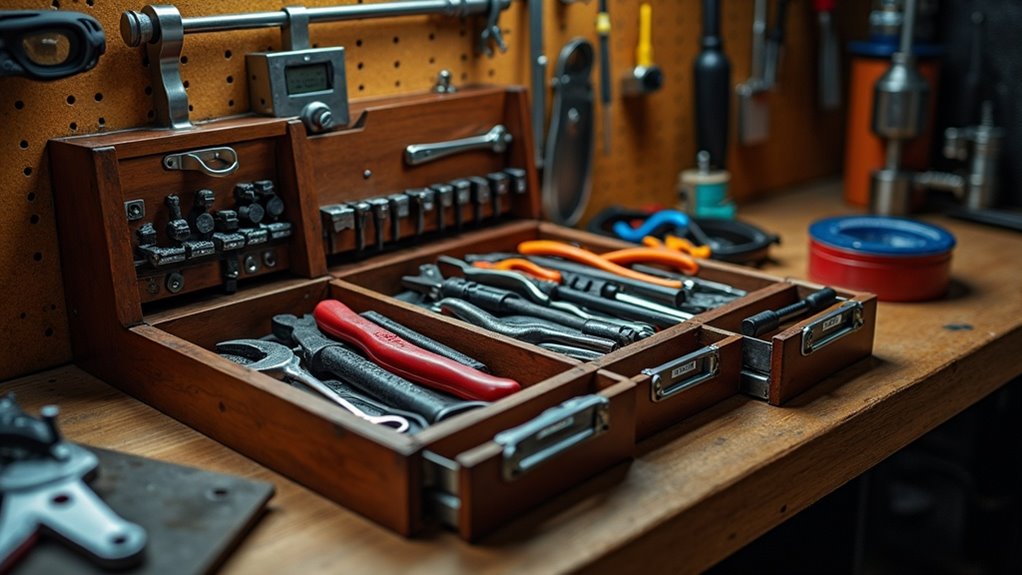
To store tools safely, use structured systems like shelves or pegboards. Always place heavier items at the bottom to prevent tipping. Implement a “Return It When Done” policy to keep your space organized. Regularly inspect your storage areas to catch potential hazards. Label specific spots for each tool, which saves time and enhances efficiency. Prioritizing organization not only boosts productivity but also keeps you safe from injuries. There’s more to learn about effective storage techniques.
Key Takeaways
- Use structured storage systems, like cabinets or pegboards, to secure tools and prevent falling hazards.
- Store heavier tools at the bottom and lighter ones on top to avoid tipping accidents.
- Clearly label storage areas to streamline access and reduce time spent searching for tools.
- Implement a “Return It When Done” policy to maintain organization and prevent clutter.
- Conduct regular inspections of storage areas to identify hazards and ensure compliance with safety standards.
The Dangers of Poor Storage Practices
When tools and materials aren’t stored properly, you put yourself and your coworkers at risk for serious injuries. Falling objects make up about 25% of workplace injuries, often due to inadequate storage systems.
Trip and slip hazards also arise from items left in walkways, increasing accident risks. Additionally, improper storage of flammable materials accounts for 60% of workplace fires.
Items left in walkways create trip and slip hazards, significantly raising the risk of accidents.
Poorly organized areas can lead to injuries from sharp tools or heavy equipment. Implementing effective storage solutions not only enhances safety but can also boost productivity by reducing lost time searching for misplaced items.
Stay organized to protect everyone’s well-being.
Prevention and Elimination Tactics
To maintain a safe working environment, implementing effective prevention and elimination tactics is vital. Start by using a structured storage system to secure tools and materials. Properly stack items, placing heavier ones on the bottom to prevent tipping. Regularly inspect your storage areas to identify hazards and guarantee compliance. Implement a “Return It When Done” policy to promote organization and safety. Label and assign specific places for each tool, including sharp items, to streamline access and minimize risks. This proactive approach not only helps prevent rust but also fosters a culture of responsibility and care in your workspace.
| Action | Benefit | Emotional Impact |
|---|---|---|
| Store sharp tools | Reduces injury risk | Peace of mind |
| Clean and maintain | Prevents tool deterioration | Pride in workplace |
| Assign specific places | Boosts efficiency | Sense of order |
Organized Storage Enhances Productivity and Safety
Organized storage not only keeps your workspace tidy but also greatly boosts productivity and safety. By designating specific storage units for your tools and materials, you can reduce clutter and avoid wasting time searching for misplaced items—saving you 30% of that time.
Clearly labeling shelves and bins helps you quickly locate what you need, enhancing efficiency. Implementing a “return it when done” policy encourages everyone to maintain organization, which 80% of workers agree improves overall effectiveness.
Regular inspections of storage areas guarantee compliance with safety practices, preventing hazards and reducing workplace injuries by 25%. Prioritize organization for a safer, more productive environment.
Stats Supporting Safe Storage Practices
While many might overlook the impact of proper tool storage, statistics reveal its essential role in maintaining a safe and efficient workplace. OSHA reports that 25% of workplace injuries stem from falling objects, underscoring the need for safe storage practices.
By using a tool cabinet with ample storage space, you can implement specific storage methods that keep your tools secure. NIOSH found that structured systems can reduce lost time searching for misplaced tools by 30%.
Additionally, 80% of workers agree that an organized workplace enhances efficiency, highlighting the importance of effective storage for both safety and productivity.
Steps to Implement Safe Storage Practices
Implementing safe storage practices is essential for preventing workplace accidents and enhancing efficiency.
Start by evaluating your current storage methods for tools in the garage. Make sure heavy tools and power tools are securely stored to avoid falling hazards.
Evaluate your storage methods for tools to ensure heavy and power tools are securely stored, preventing potential falling hazards.
Consider using vertical space with shelves or pegboards to keep moving parts organized and accessible. Create designated areas for each tool, reducing lost time searching.
Train employees on safe storage techniques and conduct regular inspections to maintain safety standards.
Adopting a “clean as you go” policy can further improve organization and productivity, fostering a culture of safety in your workspace.