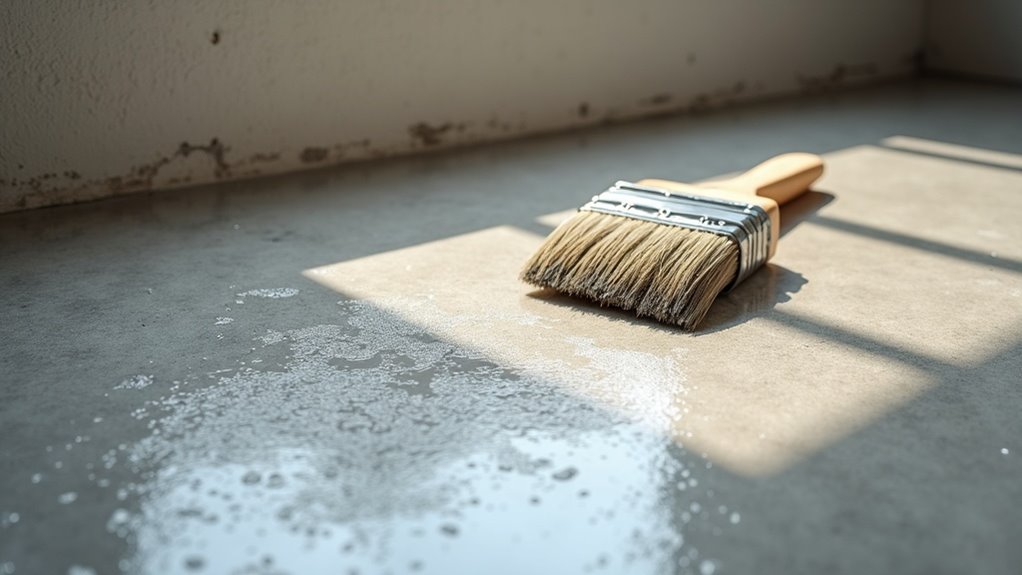
To waterproof basement corners, start by identifying vulnerable areas showing moisture signs. Clean the surfaces, sealing cracks with hydraulic cement for a solid base. Once dry, apply a high-quality waterproof coating, focusing on joints and corners. Guarantee proper drainage around your foundation by grading soil and maintaining gutters. Regular inspections keep moisture at bay. With these steps, your basement will stay dry and protected. Discover more techniques to enhance your waterproofing efforts.
Key Takeaways
- Inspect basement corners for moisture signs and repair any cracks with hydraulic cement to prevent water intrusion.
- Clean surfaces thoroughly and ensure they are dry before applying waterproof coating.
- Choose a high-quality waterproof coating and apply at least two coats, focusing on corners and joints.
- Maintain proper drainage around the foundation by grading soil away and regularly inspecting gutters and downspouts.
- Conduct regular inspections and use a dehumidifier to control humidity levels in the basement.
Identify Vulnerable Areas in Basement Corners
When you start inspecting your basement corners, it’s crucial to look for signs of moisture, as these can indicate potential water problems.
Check for dampness, discoloration, or mold growth, especially where walls meet the floor—these junctions often face water intrusion risks.
Inspect corners for dampness, discoloration, or mold, particularly at wall-floor junctions where water intrusion risks are heightened.
Don’t overlook visible cracks in the mortar or foundation; even small gaps can allow moisture to seep in.
Evaluate existing drainage systems, ensuring water is redirected away from your foundation.
Using a moisture meter, test humidity levels in these corners to identify excessively damp areas needing attention.
Prepare the Surface for Waterproofing
After identifying vulnerable areas in your basement corners, it’s time to prepare the surfaces for waterproofing. Start by removing any standing water to make certain the corners are clean and dry.
Thoroughly clean the surfaces, eliminating dust, grime, and loose masonry to improve adhesion. Inspect for mold or efflorescence, removing any signs to assure a proper seal.
Next, repair cracks and holes using hydraulic cement, applying it evenly and allowing it to dry according to the manufacturer’s instructions.
Confirm that all repairs are complete and the corners are dry before applying waterproofing paint for maximum effectiveness.
Seal Cracks and Holes With Hydraulic Cement
To effectively seal cracks and holes in your basement corners, start by applying hydraulic cement, a material specifically designed to expand as it cures, creating a robust barrier against water intrusion.
Applying hydraulic cement expands as it cures, effectively sealing cracks and holes in basement corners against water intrusion.
Clean and dry the area first to enhance adhesion. Use a putty knife or trowel to fill the cracks evenly, confirming they’re smooth and completely filled.
Allow the hydraulic cement to cure for about 24 hours, following the manufacturer’s instructions, before applying any waterproof coatings.
For larger cracks, you may need multiple applications—check for shrinkage or gaps before adding a second coat to verify effective basement waterproofing.
Apply Waterproof Coating to Corners
When applying a waterproof coating to your basement corners, choose a high-quality product designed for below-grade use to guarantee effective moisture protection.
Use a brush or roller for even application, focusing on any cracks or joints that may allow water in.
After the coating dries, inspect for any missed areas and touch up as needed to assure a thorough seal.
Choose Appropriate Coating
Applying a waterproof coating to the corners of your basement is essential for preventing water infiltration and protecting your home.
Choose a high-quality product like DRYLOK® Extreme Masonry Waterproofer, designed specifically for below-grade applications. This waterproof coating creates a reliable waterproof barrier, so you can guarantee moisture is coming from outside is kept at bay.
Before application, make certain the area is dry and clean to promote proper adhesion. Remember to apply at least two coats, allowing 2-3 hours of drying time between each.
Pay special attention to corners with a brush to cover all crevices for appropriate waterproofing.
Proper Application Techniques
Once you’ve selected the right waterproof coating, the next step is to guarantee you apply it properly to the corners of your basement.
Preparation is key, so start by ensuring the area is dry and clean for ideal adhesion. Use a brush or small roller to effectively reach tight angles and edges.
Pay special attention to any cracks or gaps—seal these with hydraulic cement before applying your waterproof coating.
Apply at least two coats, allowing 2-3 hours of drying time between each.
Finally, inspect for missed spots and add an extra coat if needed for a complete exterior waterproofing solution.
Inspect After Application
After you’ve allowed the waterproof coating to cure fully, it’s essential to inspect the corners of your basement carefully.
Check for missed spots, pinholes, or imperfections, especially at joints and seams where moisture might seep in. Use a flashlight to illuminate these areas, making it easier to spot any flaws.
If you find any issues, apply a second coat for thorough waterproofing.
Remember to regularly check the corners in the weeks following application for signs of moisture or mold growth, as these can indicate a failure that needs prompt attention.
Your diligence will help keep your basement dry and safe.
Ensure Proper Drainage Around the Foundation
To guarantee proper drainage around your foundation, start by grading the soil so it slopes away from the walls at a 5% grade.
Regularly inspect your gutters and downspouts to keep them clear of debris, preventing water from pooling near the foundation.
Additionally, maintaining your drainage systems is vital, as even small blockages can lead to major water issues.
Inspect Drainage Systems Regularly
Regular inspections of your drainage systems are essential for preventing water accumulation around your basement corners.
You should regularly inspect gutters and downspouts to verify they’re clear, directing water at least 6-10 feet away from the foundation.
Check if your exterior drainage systems, like French drains and sump pumps, are functioning properly to manage groundwater effectively.
Conduct seasonal inspections, especially after heavy rainfall, to spot any clogs that could cause pooling.
Grade Soil Away Foundation
Guaranteeing proper drainage around your foundation is essential, as poorly graded soil can lead to water pooling and potential basement flooding. To effectively grade soil away from your foundation, create a slope of at least 6 inches over the first 10 feet. Compact the soil to maintain this slope and prevent settling.
| Action | Purpose | Material |
|---|---|---|
| Grade soil | Prevent water pooling | Soil/Gravel |
| Compact soil | Maintain effective slope | Compacted soil |
| Plant vegetation | Absorb moisture, reduce erosion | Grass/Plants |
Regularly inspect this area to guarantee ongoing effectiveness.
Maintain Gutter Functionality
While maintaining gutter functionality may seem like a minor task, it plays an important role in protecting your basement from water damage.
Verify gutters are installed along your roofline to collect rainwater effectively and direct it away from your home’s foundation. Clean your gutters at least twice a year to prevent blockages that could lead to overflow.
Make sure downspouts extend at least 6 feet from the foundation to reduce the risk of moisture seeping into basement corners. Inspect for leaks regularly and consider installing gutter guards to minimize debris.
This proactive approach is crucial for effective waterproofing basement corners.
Install Additional Water Management Solutions
To effectively manage moisture in basement corners, consider installing additional water management solutions that can greatly reduce the risk of water accumulation.
A French drain system along the perimeter redirects groundwater away from foundation walls, while sump pumps efficiently expel any water collecting in low-lying areas.
A French drain system redirects groundwater, while sump pumps efficiently remove water from low-lying areas.
Additionally, installing interior drainage channels at the base of your walls captures runoff and directs it to the sump pump.
Guarantee proper grading around your home to promote water flow away from the foundation.
Finally, regularly inspect and clean gutters and downspouts to prevent clogs that could increase moisture levels near those vulnerable corners.
Regular Maintenance and Inspection for Long-term Protection
Regular maintenance and inspection of your basement corners are essential for long-term protection against water damage. Inspect your basement at least twice a year for cracks or moisture accumulation, ensuring waterproofing materials remain effective. Monitor drainage systems and use a dehumidifier to keep humidity levels below 60%.
Here’s a quick checklist:
| Action | Frequency |
|---|---|
| Inspect basement | Twice a year |
| Check drainage | Quarterly |
| Use dehumidifier | Year-round |